
Born 1992, Tokyo
Yutaka Nakayama uses the flatbed scanner as an imaging apparatus, exploring the relationship between light, time, and matter. Unlike the camera, which typically records a single moment, the scanner records images line by line over time, transforming the passage of time itself into a visible element.
Through this process, Nakayama creates works that exist between photography and painting. His practice enters into dialogue with the legacy of photograms by Man Ray and László Moholy-Nagy, while reconsidering the possibilities of light-based image-making in the digital age.
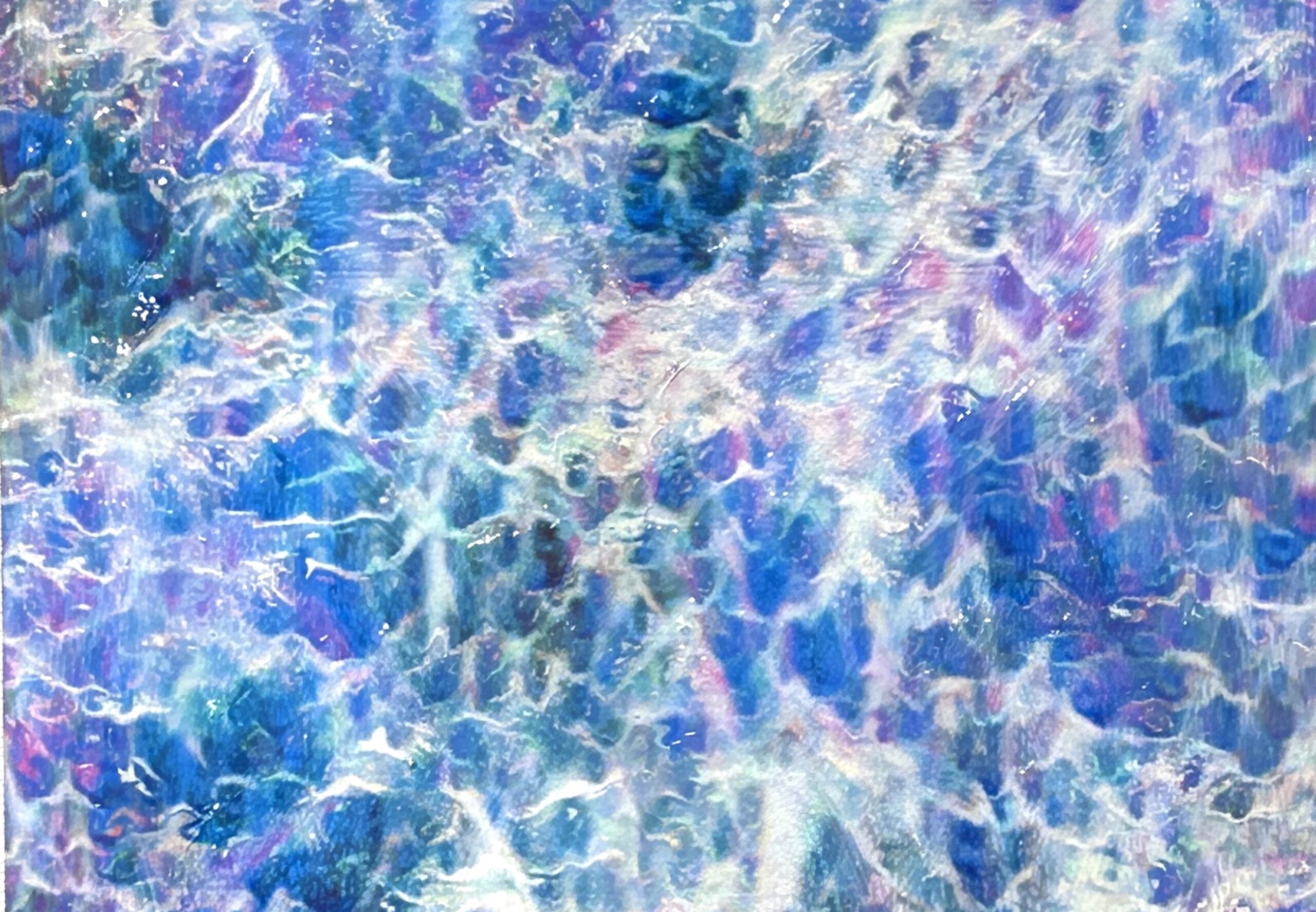
Rather than depicting existing objects or landscapes, his images emerge from the interaction between light, reflective surfaces, and the physical movement of the scanner. The resulting forms evoke natural phenomena — water, cellular structures, minerals, and cosmic spaces — while remaining abstract visual experiences suspended between recognition and imagination.
In an era where digital images can be endlessly generated and reproduced, Nakayama’s works retain a direct relationship with physical reality. Each image is the trace of an actual encounter between light and matter, preserving duration and movement within a distinct visual record.
Nakayama’s scanography expands the definition of photography beyond the camera, proposing a new field where photography, painting, and digital processes converge. His work invites viewers to reconsider the fundamental act of seeing — how images are formed, how light becomes visible, and how time can be transformed into visual experience.